
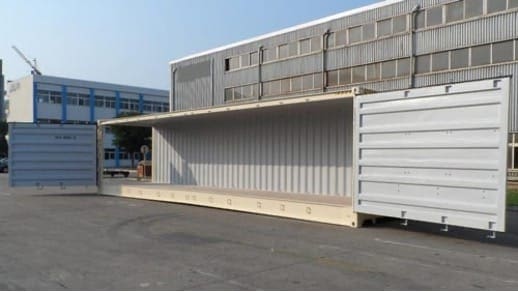
If you’ve been shopping for an open-sided shipping container or a double-door shipping container, you’ve probably noticed three things right away:
- They cost noticeably more than standard containers
- They’re harder to find
- And “used” options are almost nonexistent
Why are these specialty containers so limited compared to standard 20 ft and 40 ft boxes?
This guide breaks down the exact reasons based on how these units are designed, manufactured, and used within the global shipping industry so you know what to expect before you buy.
What Makes Open-Sided and Double-Door Containers Different?
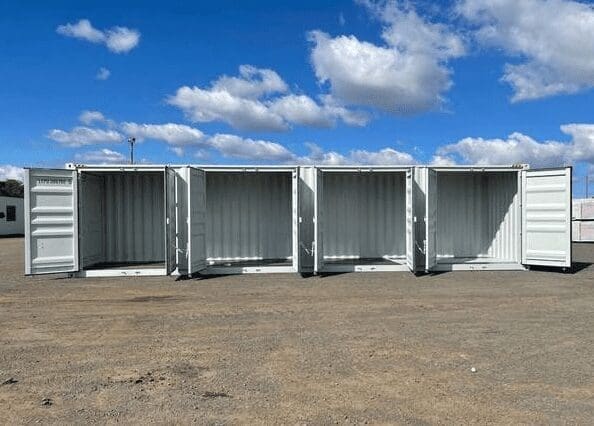
Unlike standard units, specialty containers are designed for accessibility and convenience. They’re ideal for buyers who need:
- Full side access
- Loading from multiple angles
- Quick entry for bulky equipment
- Flexible layouts for retail, events, or workshops
But everything that makes them useful also makes them more expensive.
Let’s break down why.
1. They Are Not Mass-Produced
Standard shipping containers (20 ft and 40 ft) are manufactured by the millions every year. They are the backbone of worldwide freight shipping and are produced at massive scale to meet global demand.
Open-sided and double-door containers are not.
These specialty units (open sided and double door shipping containers) are manufactured in very small batches because they require:
- Extra steel reinforcement along the sides
- More complex framing to support multi-door openings
- Multi-panel doors and locking assemblies
- Skilled labor to weld and align the components
Where a standard container has two doors on one end, these specialty designs have:
- Four to eight doors on the side (open-sided), or
- Door sets on both ends (double-door)
This additional engineering drastically limits how many units can be produced at once.
2. They Cost More to Build
Open-sided and double-door units are more complex because of what they require structurally:
Specialty Containers Include Features Like:
- Extra steel door frames
- Additional hinged or sliding doors
- Multiple locking bars and seals
- More welds, more hardware, and more labor
- Reinforced floors and supports
- Thicker or additional corrugated steel panels
Compared to a standard 20 ft or 40 ft container, manufacturing a specialty unit is a more expensive and more labor-intensive process.
The higher price tag reflects the complexity behind their construction not just their convenience.
3. They Are Not Used in Global Shipping Fleets
Steamship lies avoid open-sided and double-door shipping containers because they’re harder to stack and more expensive to maintain. Instead, they rely almost entirely on standard containers.
And if these specialty units aren’t used on ships, they never get old enough to become “used” inventory. That’s why you almost never find them secondhand.
4. Sold Only as “New / One-Trip” Containers
Because steamship lines don’t use these containers long-term, the only way they enter the U.S. market is through purpose-built, one-trip production.
Here’s how it works:
- The container is built at a factory overseas
- It is shipped to the U.S. filled with cargo for its first and only shipping trip
- Once it arrives, it is sold as a new / one-trip container
This is the only lifecycle specialty containers have.
The only “used” open-sided or double-door container you might ever see comes from:
- A private owner reselling one
- A short-term rental agency liquidating part of their fleet
But these situations are rare and inventory sells quickly.
5. High Demand + Low Supply = Higher Pricing
Even though supply is limited, demand for open-sided and double-door units continues to grow.
Buyers love these containers for:
- Retail pop-ups and mobile stores
- Workshops and fabrication spaces
- Events and temporary structures
- Construction job sites
- ATV and motorcycle storage
- Municipal and school programs
- Inventory overflow and palletized storage
Their ability to open from the side or both ends makes loading and unloading much easier than a standard container.
But the math is simple:
- Low production
- Limited U.S. availability
- No used inventory
- Higher construction cost
- High demand
= A consistently higher price point.
This won’t change—because it’s built into how specialty containers are manufactured and used worldwide.
Is an Open-Sided or Double-Door Container Worth the Extra Cost?
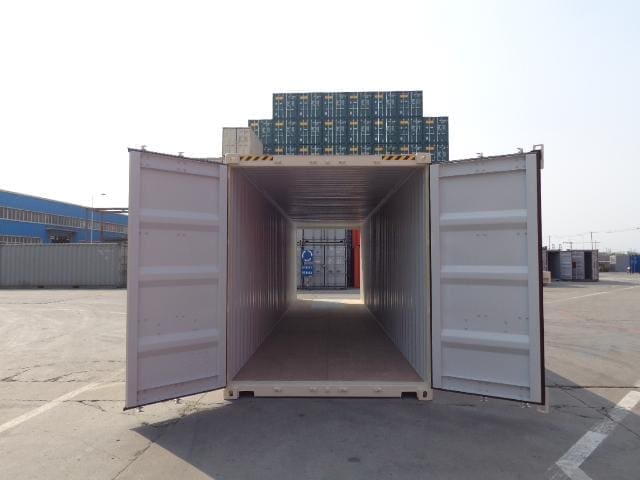
In nearly every case, yes if you need the accessibility these layouts provide.
They offer massive advantages over standard units:
- Easy front, side, or multi-angle access
- Faster loading for construction and warehouse applications
- Flexible layout options for retail and events
- Ideal for storing equipment that cannot be maneuvered through a standard 7 ft 8 in doorway
- Perfect for palletized goods and forklift access
They’re specialty products built for specialty needs.
And because they often solve logistical problems that standard containers cannot, buyers rarely regret the investment.
Final Thoughts
Open-sided and double-door shipping containers are valuable, versatile, and in high demand but they’re also limited, expensive, and almost never available used because of how they’re produced and how the global steamship lines operate.
If you’re considering purchasing one, it’s important to understand:
- Why they cost more
- Why availability is limited
- Why used inventory doesn’t exist
- And why they’re only sold as new/one-trip units
At Container Sales Group, we can help you compare layouts, understand pricing, and explore availability in your region so you know exactly what to expect before you buy. Call us at 888-320-5938 or get an instant quote online.