
Standard vs. High Cube Containers
The key difference between a standard and a high cube shipping container is height. A standard container stands 8 ft 6 in tall, while a high cube container adds an extra foot, measuring 9 ft 6 in tall. That additional space may not sound like much, but it provides a noticeable increase in interior volume—ideal for storing taller equipment, adding insulation, or building out container conversions such as offices or workshops.
High cube containers also allow for better airflow and temperature control, making them a popular choice for modified spaces or climate-sensitive storage. Standard containers, on the other hand, are preferred for general-purpose storage, transportation, and cost efficiency.
To help decide which option best fits your project, read our full guide on choosing between Standard and High Cube containers.
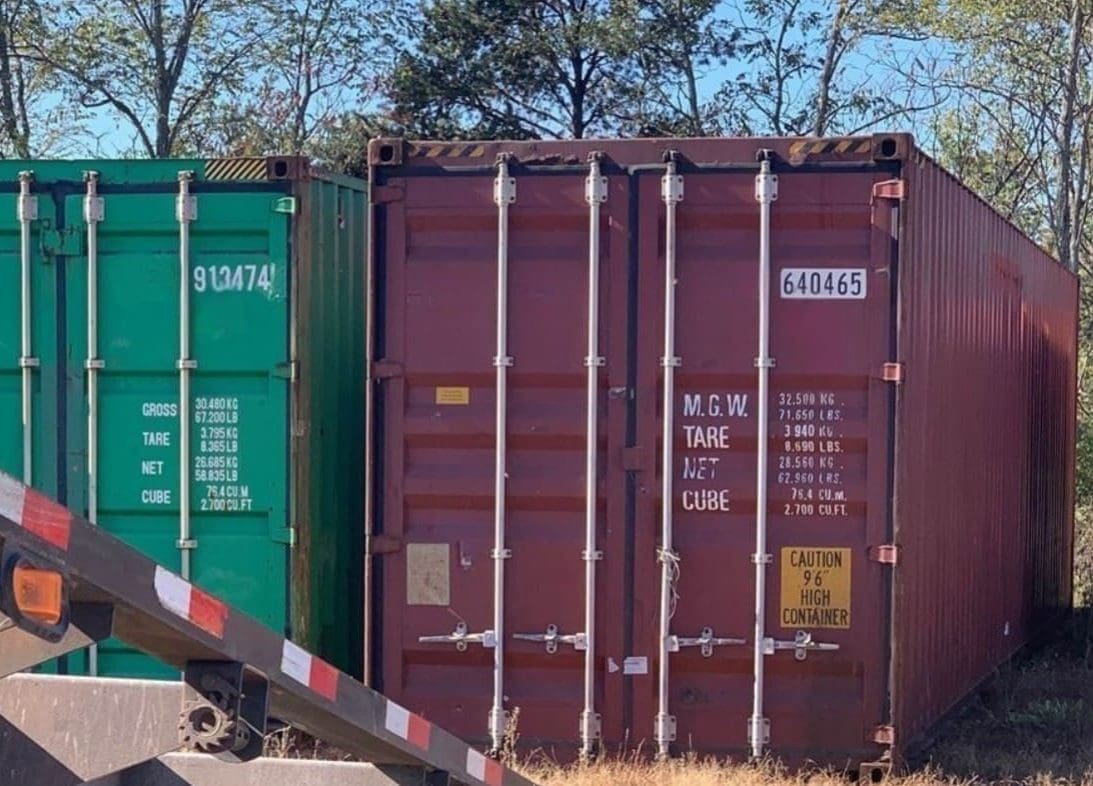
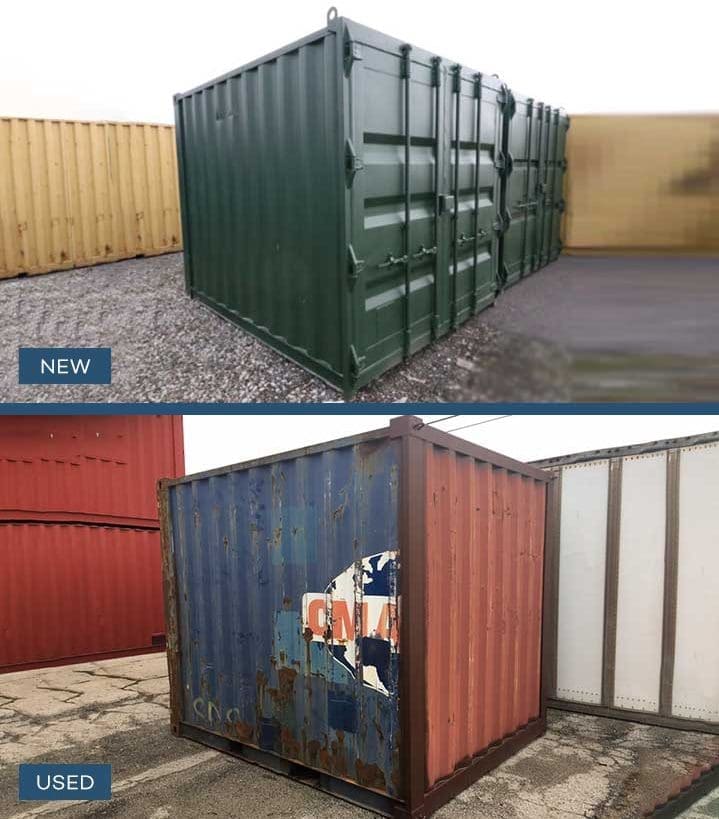
10ft Shipping Container Dimensions — New
The 10ft shipping container is a rare find and a practical solution for spaces where a standard 20ft simply will not fit. Popular as backyard sheds, she sheds, man caves, and compact job site boxes, the 10ft offers solid steel security and weather protection in a footprint that works on smaller lots, narrow driveways, and urban properties. Availability is limited — call us to check current stock.
Dimension Type | Measurements |
|---|---|
Exterior Dimensions (L x W x H) | 10ft x 8ft x 8ft 6in |
Interior Dimensions (L x W x H) | 9ft 4in x 7ft 8.6in x 7ft 10.2in |
Door Opening (W x H) | 7ft 8.5in x 7ft 8.5in |
Cubic Capacity | 561 cu ft |
Tare weight (on average) | 2,850 lbs |
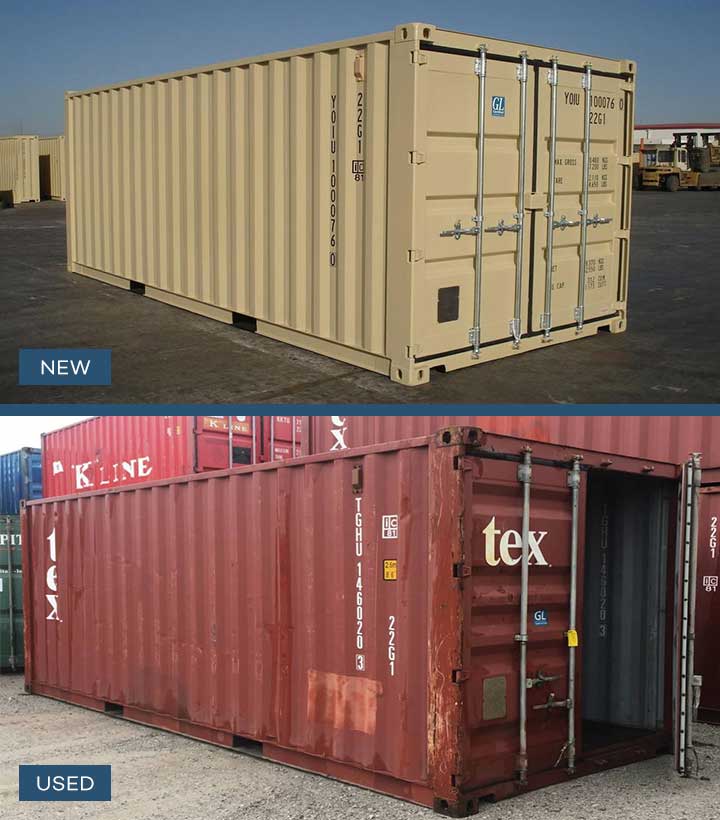
20ft Shipping Container Dimensions — New & Used
The 20ft shipping container is the most popular size in the United States and for good reason. It fits in most driveways, delivers to tight job sites and residential properties, and offers 1,165 cubic feet of secure, weather-tight storage. Contractors use them for tool and equipment lockup, homeowners use them for renovation overflow and long-term storage, and small businesses use them for inventory and seasonal stock. Get more ideas »
Dimension Type | Measurements |
|---|---|
Exterior Dimensions (L x W x H) | 19ft 11in x 8ft x 8ft 6in |
Interior Dimensions (L x W x H) | 19ft 4in x 7ft 9in x 7ft 8in |
Door Opening (W x H) | 7ft 5in x 7ft 8in |
Cubic Capacity | 1,165 cu ft |
Tare weight (on average) | 4,853 lbs |
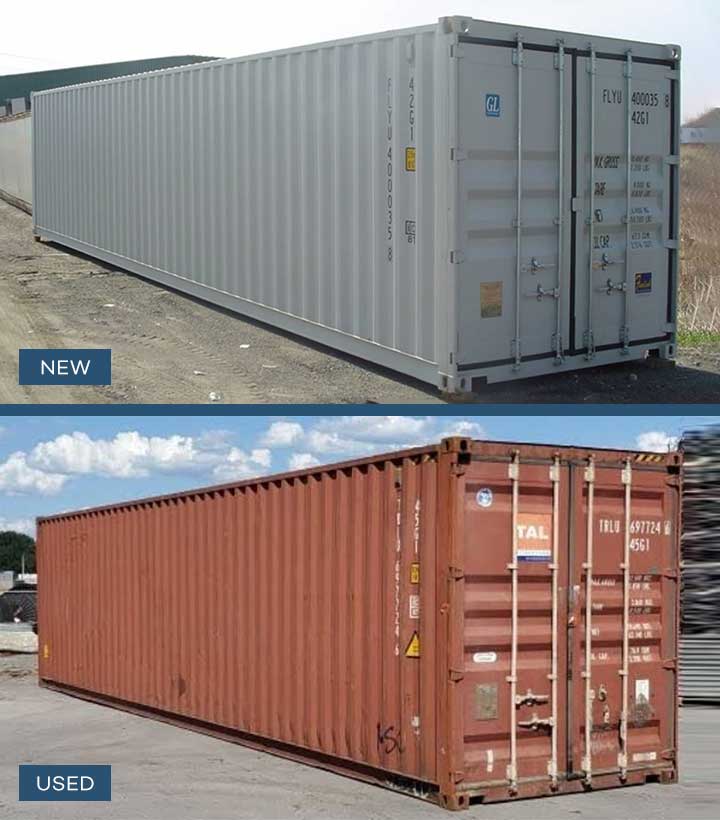
40ft Shipping Container Dimensions — New & Used
The 40ft shipping container is the right choice when you need serious storage capacity without sacrificing durability. At nearly double the floor space of a 20ft, it is the go-to for large construction sites, manufacturing and industrial storage, agricultural operations, and any application where a single container needs to hold a lot. If your site can accommodate the delivery clearance, the 40ft almost always delivers better value per square foot than two smaller units.
Dimension Type | Measurements |
|---|---|
Exterior Dimensions (L x W x H) | 40ft x 8ft x 8ft 6in |
Interior Dimensions (L x W x H) | 39ft 4in x 7ft 9in x 7ft 8in |
Door Opening (W x H) | 7ft 8in x 7ft 5in |
Cubic Capacity | 2,390 cu ft |
Tare weight (on average) | 7,800 lbs |
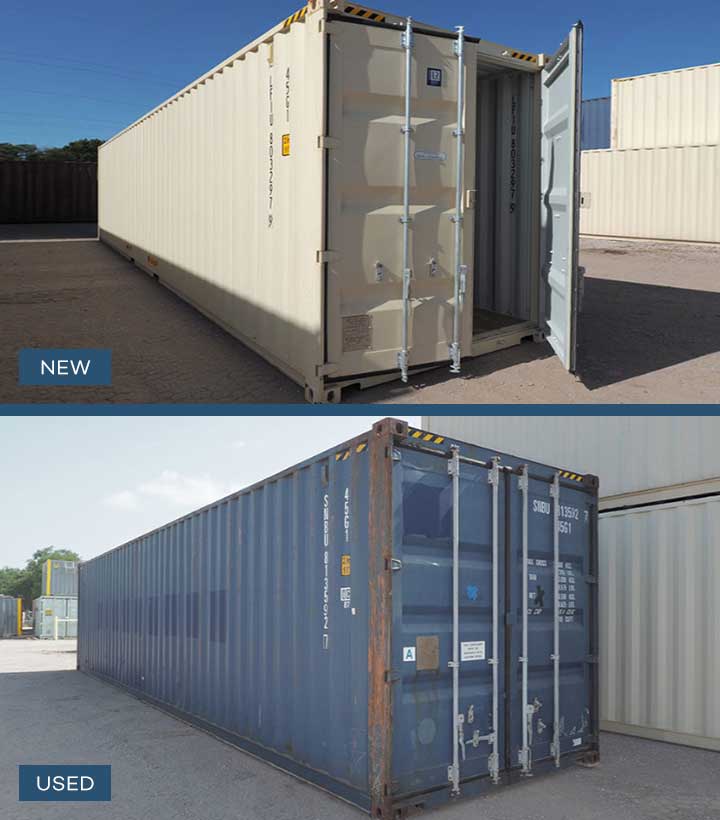
40ft High Cube Shipping Container Dimensions- New & Used
The 40ft High Cube gives you everything the standard 40ft does plus an extra foot of interior height, bringing the ceiling to 8ft 10in inside. That additional clearance makes a significant difference for tall equipment, stacked pallets, shelving systems, and any container conversion project like an office, workshop, or studio. It is the preferred starting point for architects and builders working on modular construction and container builds.
Dimension Type | Measurements |
|---|---|
Exterior Dimensions (L x W x H) | 40ft x 8ft x 9ft 6in |
Interior Dimensions (L x W x H) | 39ft 4in x 7ft 9in x 8ft 10in |
Door Opening (W x H) | 7ft 8in x 8ft 6in |
Cubic Capacity | 2,700 cu ft |
Tare weight (on average) | 8,160 lbs |
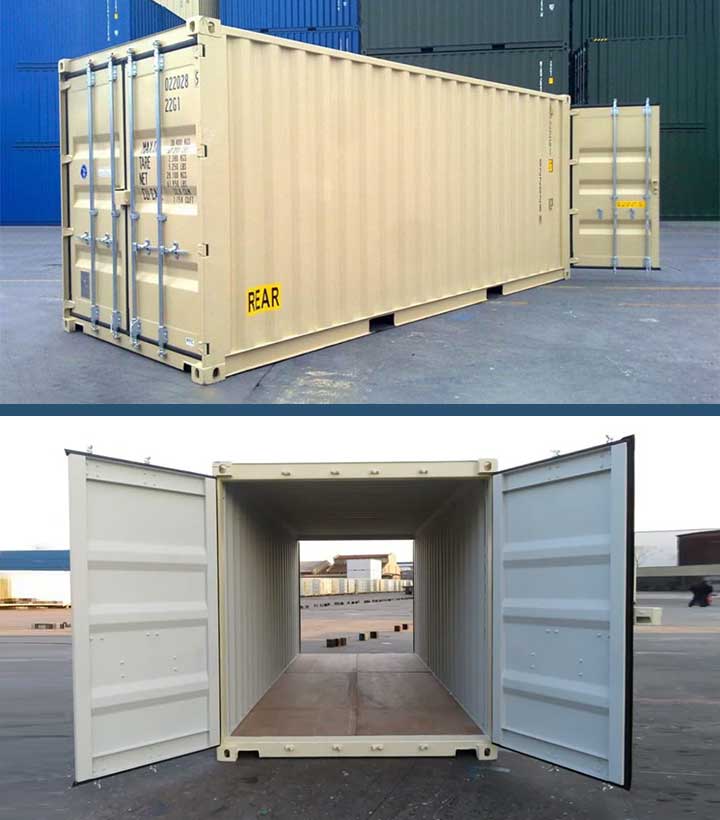
20ft Standard, Double Doors Both Ends- New
Double door containers (doors on both ends), also known as tunnel containers, make loading, unloading, and sorting of goods easier and more flexible as you can access the container from both ends. It can also be repurposed as a general dry container as well by closing one of the doors permanently.
Dimension Type | Measurements |
|---|---|
Exterior Dimensions (L x W x H) | 20ft x 8ft x 8ft 6in |
Interior Dimensions (L x W x H) | 19ft 4in x 7ft 8in x 7ft 9in |
Door Opening (W x H) | 7ft 8in x 7ft 5in |
Cubic Capacity | 1,172 cu ft |
Tare weight (on average) | 5,071.5 lbs |
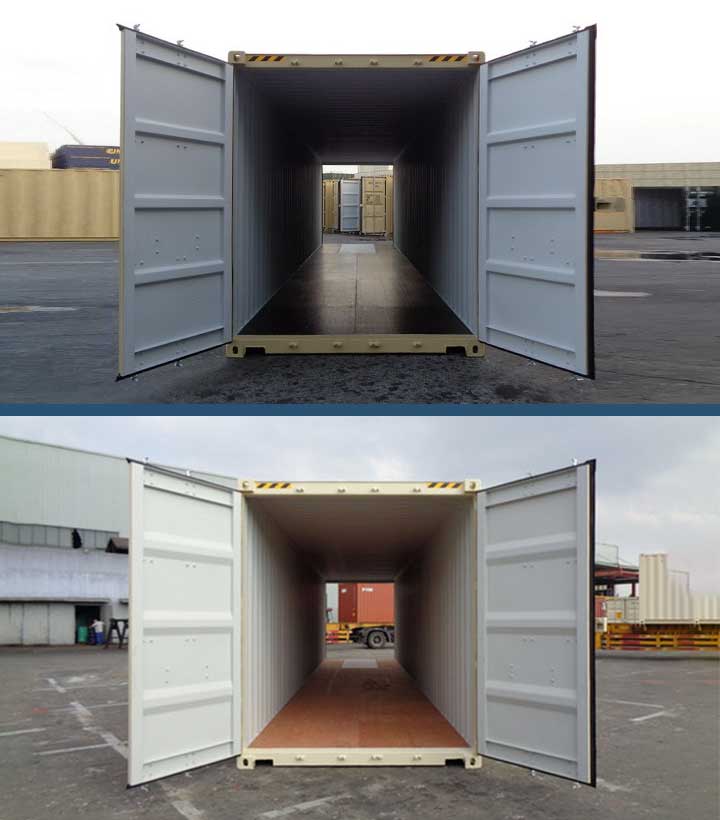
40ft Standard, Double Doors Both Ends- New
The 40ft tunnel container delivers maximum storage capacity with the added advantage of drive-through access. Both sets of doors open fully, creating a pass-through that works for forklifts, equipment, and high-volume loading operations. A practical choice for manufacturing facilities, distribution staging, agricultural operations, and large construction sites where materials move in and out frequently from multiple directions.
Dimension Type | Measurements |
|---|---|
Exterior Dimensions (L x W x H) | 40ft x 8ft x 8ft 6in |
Interior Dimensions (L x W x H) | 39ft 4in x 7ft 9in x 7ft 10in |
Door Opening (W x H) | 7ft 8in x 7ft 6in |
Cubic Capacity | 2,377 cu ft |
Tare weight (on average) | 8,160 lbs |
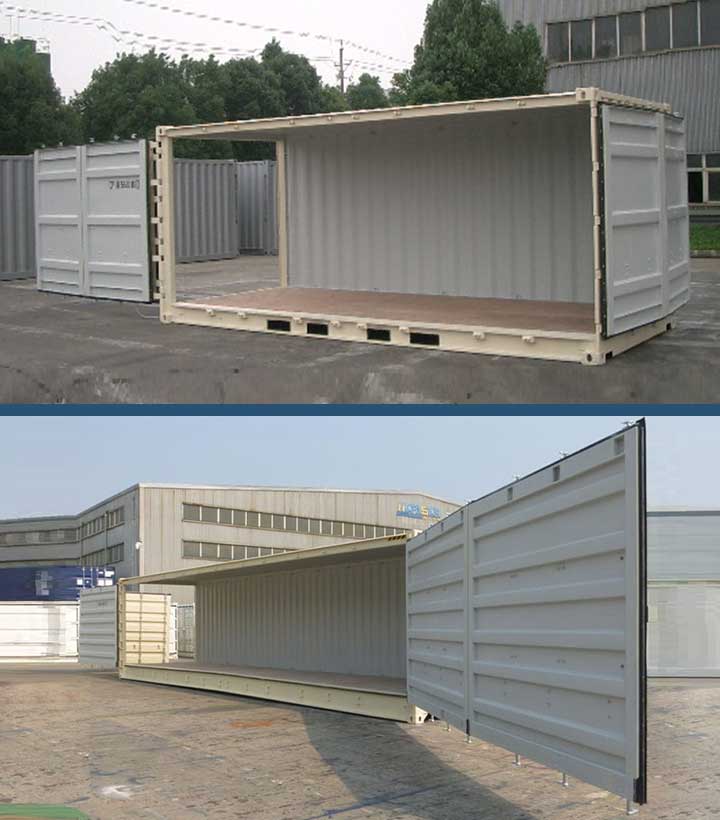
20ft Standard, Open Side- New
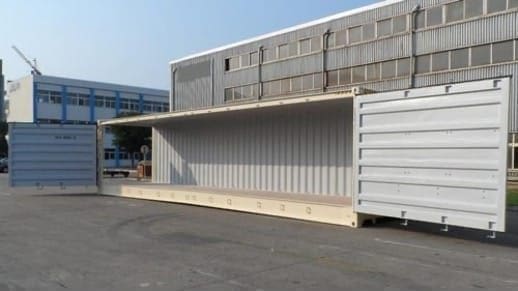
The 20ft open side container eliminates the biggest frustration of standard end-door storage, digging through everything to reach what is in the back. The full-length side opening gives you direct access to any point in the container from the side, making it ideal for long materials like lumber, pipe, and rebar that do not fit efficiently through standard end doors. A strong choice for contractors, lumber yards, rental companies, and anyone storing materials that need to be grabbed quickly without reorganizing the entire container.
Dimension Type | Measurements |
|---|---|
Exterior Dimensions (L x W x H) | 20ft x 8ft x 8ft 6in |
Interior Dimensions (L x W x H) | 19ft 4in x 7ft 8in x 7ft 9in |
Door Opening (W x H) | 7ft 8in x 7ft 5in |
Cubic Capacity | 1,172 cu ft |
Tare weight (on average) | 5,071.5 lbs |
40ft High Cube, Open Side- New
The 40ft High Cube open side container combines maximum floor space, extra height, and full-length side access in one unit. At 40 feet long with doors running the entire side, it handles the largest material storage challenges on active job sites and industrial operations. The extra foot of interior height makes it practical for tall equipment, stacked materials, and shelving systems that a standard open side unit cannot accommodate. Expect to pay a premium over a standard container — the structural reinforcement required for the full side opening drives the price, but for the right application there is no better solution.
Dimension Type | Measurements |
|---|---|
Exterior Dimensions (L x W x H) | 40ft x 8ft x 9ft 6in |
Interior Dimensions (L x W x H) | 39ft 4in x 7ft 9in x 8ft 10in |
Door Opening (W x H) | 7ft 8in x 8ft 6in |
Cubic Capacity | 2,700 cu ft |
Tare weight (on average) | 8,160 lbs |
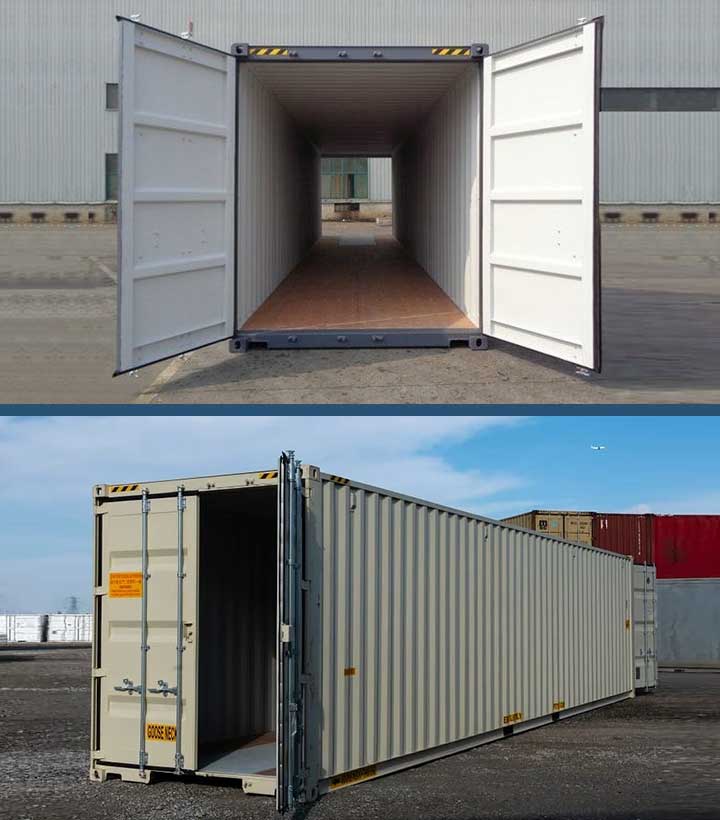
40ft High Cube, Double Doors Both Ends- New
The 40ft High Cube tunnel container is the largest and most versatile specialty configuration in the lineup. Extra height, maximum length, and doors on both ends combine to create a container that works as hard as the operation around it. Popular for large modular construction projects, industrial storage, and container conversion builds where interior height and through-access both matter. If you are building something permanent or managing a complex high-volume operation, this is the unit to start with.
Dimension Type | Measurements |
|---|---|
Exterior Dimensions (L x W x H) | 40ft x 8ft x 9ft 6in |
Interior Dimensions (L x W x H) | 39ft 4in x 7ft 9in x 8ft 10in |
Door Opening (W x H) | 7ft 8in x 8ft 6in |
Cubic Capacity | 2,700 cu ft |
Tare weight (on average) | 8,160 lbs |
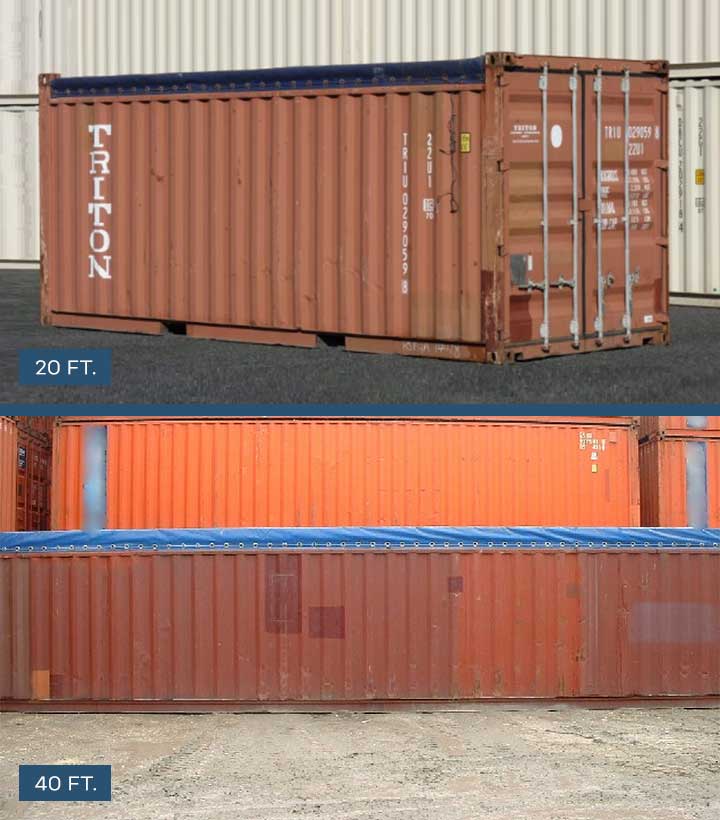
20 ft & 40 ft., Open Top- Used
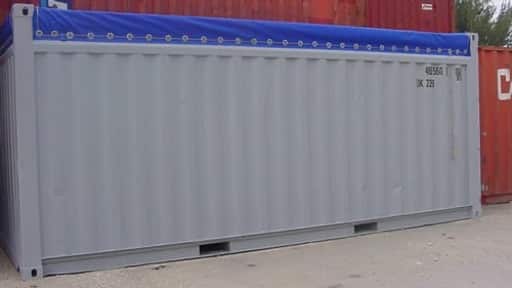
Open top containers are designed for cargo that cannot be loaded through standard doors. Oversized equipment, machinery, steel beams, pipes, scrap metal, and construction materials can be lifted in by crane or forklift from above. The removable roof bows and tarp system keep contents covered while allowing top-loading that a standard container simply cannot accommodate. Available in used condition, these are a practical and cost-effective solution for export shipping, heavy industry, and job sites moving materials that do not fit any other way.
20 ft.
Dimension Type | Measurements |
|---|---|
Exterior Dimensions (L x W x H) | 20ft x 8ft x 8ft 6in |
Interior Dimensions (L x W x H) | 19in 4in x 7ft 8in x 7ft 9in |
Door Opening (W x H) | 7ft 8in x 7ft 5in |
Cubic Capacity | 1,172 cu ft |
Tare weight (on average) | 5,071.5 lbs |
40 ft.
Dimension Type | Measurements |
|---|---|
Exterior Dimensions (L x W x H) | 40ft x 8ft x 8ft 6in |
Interior Dimensions (L x W x H) | 39ft 4in x 7ft 9in x 7ft 8in |
Door Opening (W x H) | 7ft 5in x 7ft 8in |
Cubic Capacity | 2,330.8 cu ft |
Tare weight (on average) | 9,039 lbs |
From Our Blog
Why Are 20 ft. Standard Shipping Containers So Popular?
Compared to other sizes and types, the 20 ft. container is typically more affordable, highly versatile, and easy to transport. Its compact size makes it perfect for smaller loads or locations with limited delivery space, making it an excellent choice for a variety of applications.

How to Choose the Right Shipping Container for Your Project
The first step to choosing the right size container is to determine your exact and specific project needs. When choosing how big a shipping container needed, you should consider the following:
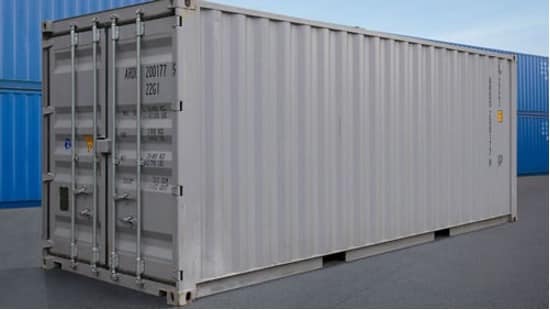
Choose Your Size-
20ft vs. 40ft Container
Although a 20ft shipping container costs less than a 40ft unit, the 40ft often offers a better value. In most cases, you get nearly double the storage space for only a modest increase in price.
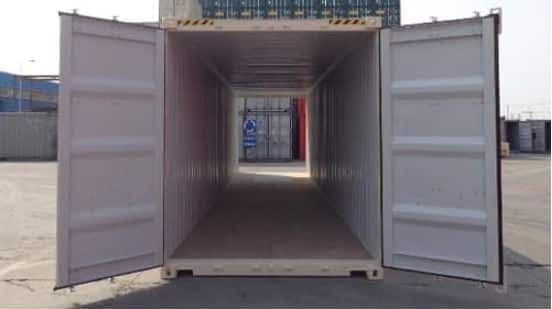
Confirm How Much Space You Need For Storage
Each container is built to carry a specific amount of cargo. Take the time to research square footage capacity to ensure your container will hold all your items.
Choose the Right Height
8’6″ vs. 9’6″
Standard height containers are 8ft 6in high and High Cube Containers are 9ft 6in high. To accommodate bigger or taller items, you may choose a High Cube container.
Do You Have The Required Delivery Space?
Typically, a 20ft container needs 50-75ft of straight-line space, and a 40ft container needs 130ft of straight-line space to safely deliver the shipping container on the ground.
At Container Sales Group, our main goal is to help our customers solve their storage, building & ocean export needs. We are proud to be a Women-Owned Company, with experience selling New and Used Shipping Containers since 1998. Container Sales Group buys shipping containers direct from the steamship lines to offer our customers the highest quality container at the most competitive prices.
We work with F500 Companies, Nationwide Construction Firms, Universities/Schools, Builders, Individual Homeowners, and International Freight Forwarders- helping them with their shipping container needs. Every container is backed by our Container Guarantee. Let us know if we can help you, call Container Sales Group at (888)320-5938.
From Our Blog
Standard vs High Cube Shipping Containers – Comparison
Shipping containers come in a variety of sizes, types, and features, making them versatile for different applications. One of the most notable distinctions is between Standard (Dry) containers and High Cube (HC or High Capacity) containers, primarily defined by their height.
FAQ
A standard shipping container is typically 8 feet wide and 8 feet 6 inches tall, with lengths of 10 ft, 20 ft, or 40 ft. The most common size is the 20-foot container, which offers about 1,165 cubic feet of interior space.
A high cube container is one foot taller than a standard unit, measuring 9 feet 6 inches in height. That extra foot of space makes it ideal for storing taller equipment, stacking pallets, or creating modified container builds like offices and workshops.
For ground delivery using a tilt-bed truck, plan for 50 to 75 feet of straight-line clearance for a 20ft container and 130 feet of straight-line clearance for a 40ft container. You will also need at least 14 feet of overhead clearance, no low branches, wires, or overhangs in the delivery path. The delivery area should be firm, level, and free of obstacles so the driver can safely set the container down. Not sure if your site qualifies? Call us at (888) 320-5938 before you order and we will walk through it with you.
Yes. A 20-foot container can fit most small cars, ATVs, and motorcycles. Larger vehicles or trucks usually need a 40-foot or 40-foot High Cube container for adequate clearance and loading space.
- 10 ft: approximately 560 cubic feet
- 20 ft: approximately 1,165 cubic feet
- 40 ft: approximately 2,350 cubic feet
- 40 ft High Cube: approximately 2,700 cubic feet
These measurements may vary slightly by manufacturer or flooring type.
Yes. Nearly all ISO-standard shipping containers are 8 feet wide, regardless of height or length. This uniform width ensures easy stacking and compatibility with trucks, ships, and rail transport.
Approximate empty weights are:
- 10 ft: 2,800-3,000 lbs
- 20 ft: 4,800-5,000 lbs
- 40 ft: 8,000-8,600 lbs
- 40 ft High Cube: 8,500-8,900 lbs
Weight can vary depending on the steel thickness and flooring materials used.
External dimensions are fixed to meet transport standards, but containers can be custom-cut or modified for specialty projects such as offices, kiosks, or workshops. Container Sales Group can assist with custom options or connect you to trusted modification partners.
Yes. External dimensions include the corner castings and door hardware. Internal measurements reflect the usable space inside the container walls, floor, and ceiling.
That depends on your use case. For smaller storage needs, a 10-foot unit is often sufficient but harder to find. For construction sites, general storage, or jobsite offices, the 20-foot container is most common. Large storage projects or container conversions are best suited for 40-foot or 40-foot High Cube options. If you’re unsure, call 888-320-5938 to discuss your project with a Container Sales Group specialist.