Getting a shipping container delivered isn’t just about ordering one. Your site needs to be prepared so delivery goes smoothly, safely, and exactly where you want the container placed.
Whether you’re buying a container for storage, construction, or a project, understanding delivery requirements ahead of time can save time, money, and frustration.
This guide walks you through the key considerations for shipping container delivery, including:
- Truck access and maneuvering space
- Ground stability and surface requirements
- Overhead and side clearances
- Proper container positioning
How Are Shipping Containers Delivered
Shipping containers are delivered using flatbed or tilt-bed trucks (commonly called rollback trucks). For longer distances or larger containers, flatbed trucks are used, with the container offloaded by crane or forklift at the destination.
The most common method for residential, commercial, and job-site deliveries is the tilt-bed, where the truck backs into position, raises the bed, and the container slides off the rear in a straight line onto the ground, no crane or forklift required.
Because delivery relies on straight-line placement, proper site preparation is essential.

Space Required for Delivery
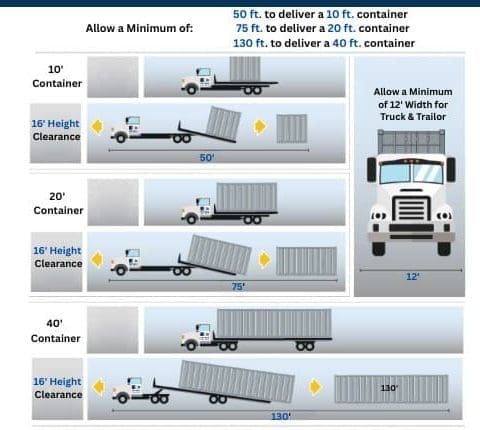
Shipping containers are delivered using tilt-bed trucks, the same style used for dumpster drop-offs. The truck backs in, raises the bed, and the container slides straight off onto the ground.
To ensure a smooth delivery, confirm your site has:
- A straight, unobstructed path for the truck to back into
- At least 12 ft of width and 16 ft of height clearance
- No tight turns, low-hanging branches, power lines, or overhead obstructions
Pro Tip: Before your delivery date, walk the path from the street to your placement spot and look for anything that could block a large truck. A little prep goes a long way.
Maneuvering & Turn Radius
Delivery isn’t just about straight space, the delivery truck needs room to turn, align, and back up:
- No tight, curved driveways without clear turn radius
- No obstacles that make backing in unsafe
- Be aware of underground utilities (sprinkler systems, gas lines, septic systems) before delivery
Keep in mind, 40 ft containers need significantly more maneuvering room than 20 ft containers. A 20 ft container is typically delivered on a shorter, straight flatbed truck, which can handle tighter driveways and smaller placement areas. In contrast, a 40 ft container is delivered on a larger tractor-trailer combination that requires more space to turn, straighten out, and back safely into position.
If your site is irregular or tight, contact your supplier early so they can plan or propose alternatives.

Confirm Container Door Orientation
Before delivery, it’s important to decide how the container should be loaded on the truck, as this determines which direction the doors will face once the container is placed. This is especially important when positioning the container near a fence, building, or other fixed structure.
Door Orientation Options
- Doors facing the cab – The container is loaded so the storage (swing) doors face the front of the truck during delivery.
- Doors facing the rear – The container is loaded so the storage doors face the back of the truck during delivery.
For a specialized container, with entry doors also on the side of the container, door orientation is equally important. You’ll need to specify whether you want the side entry doors positioned on the driver’s side or passenger’s side of the truck at delivery.

Repositioning a container after delivery is not possible with all trucks and may require the container to be returned to the depot to be turned around, which involves an additional charge. For this reason, it is important to confirm the correct door orientation before delivery.
Overhead & Side Clearances
Before delivery day, make sure there are no obstructions in the path:
Overhead
- Power lines
- Tree branches
- Eaves
- Roof overhangs
The delivery truck and container can reach up to ~16 feet high during placement, so overhead clearance is essential.
Side Clearance
- Fence posts
- Buildings
- Vehicles
- Utility boxes
Remove any objects that could restrict safe truck access, and make sure there is a minimum of 12 feet of clear width for delivery.

Ground & Surface Requirements
Container delivery trucks can weigh over 40,000 pounds, even when delivering an empty container. Soft or unstable ground can cause them to sink or tip.
Best surfaces:
- Compacted gravel
- Asphalt
- Concrete
- Firm dirt
Avoid:
- Wet grass
- Mud
- Saturated soil
- Sand
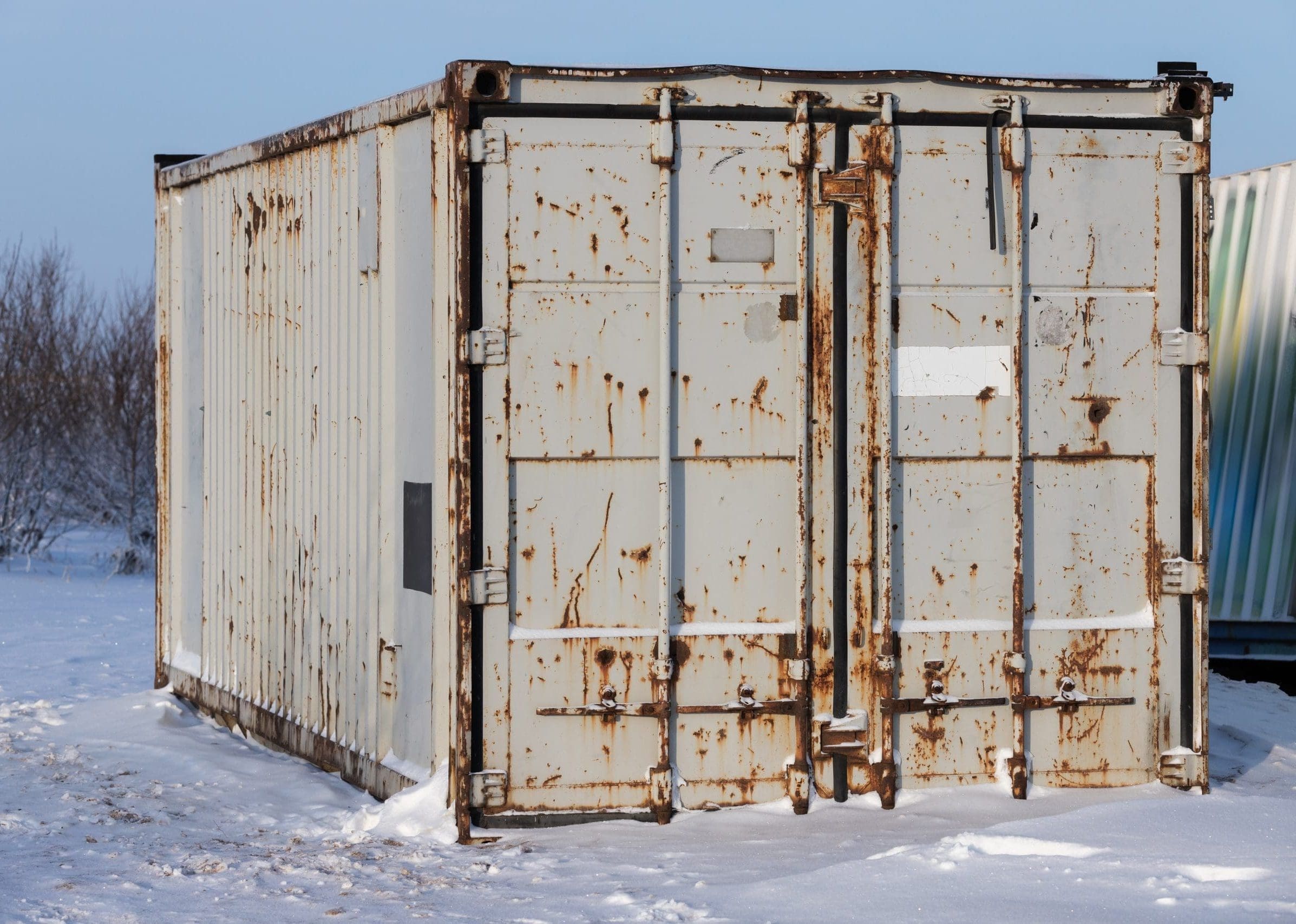
If the ground at your site may be soft, consider creating a temporary solid pad using pressure-treated timber sleepers (like 6x6s or large beams), railroad ties or concrete blocks before delivery. During a tilt bed delivery, two people are needed to place the timber sleepers (or other items) under the 4 corner posts of the shipping container as the container slowly slides off truck unto ground. This helps support the container’s weight and keeps it level after placement. For proper door operation, 40-ft shipping containers must be delivered on firm, stable ground.
Delivery Options
Container delivery trucks can weigh over 40,000 pounds, even when delivering an empty container. Soft or unstable ground can cause them to sink or tip.
Best surfaces:
- Compacted gravel
- Asphalt
- Concrete
- Firm dirt
Avoid:
- Wet grass
- Mud
- Saturated soil
- Sand
If the ground at your site may be soft, consider creating a temporary solid pad using pressure-treated timber sleepers (like 6x6s or large beams), railroad ties or concrete blocks before delivery. During a tilt bed delivery, two people are needed to place the timber sleepers (or other items) under the 4 corner posts of the shipping container as the container slowly slides off truck unto ground. This helps support the container’s weight and keeps it level after placement. For proper door operation, 40-ft shipping containers must be delivered on firm, stable ground.
Drainage & Water Considerations
Shipping containers are designed to rest on their 4 corner posts (castings) and with the steel cross member beams that are underneath the marine grade wooden floor, making it about 6 -8 inches up off the ground . Still standing water or poor drainage around your container location can cause long-term issues:
- Moisture can soften the container floor and promote rust
- Trucks may sink during delivery
- Doors may not open properly if the ground settles unevenly
To protect your container:
- Elevate it slightly with pressure-treated timber blocks, railroad ties, or gravel
- Choose a site with natural drainage
- Avoid low spots where water collects
Good drainage also prolongs the life of your container’s floor and structural integrity.
Shipping Container Delivery Costs
How much does shipping container delivery cost?
Shipping container delivery cost depends on distance from the depot, container size, delivery method, and site conditions. There is no flat nationwide delivery price.
Unlike small package shipping, container delivery requires specialized trucks, licensed drivers, insurance coverage, and careful site preparation to safely place heavy steel containers at a residential or commercial property.
Key factors that affect shipping container delivery cost include:
- Mileage from the nearest container depot
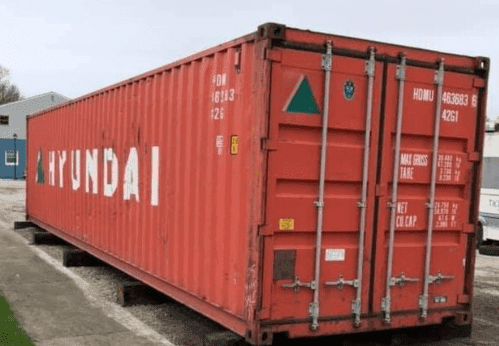
- Container size (20 ft vs. 40 ft or High Cube)
- Delivery method (typically tilt-bed / roll-off truck)
- Site access, clearance, and ground conditions
- Local requirements or delivery challenges
Larger containers, such as 40-foot or High Cube units, generally cost more to deliver because they require longer trucks, more clearance, and additional maneuvering space. Specialty containers may also impact delivery logistics.
Mileage is often the biggest cost driver. The farther the delivery address is from the container depot, the higher the delivery cost due to fuel, driver time, and equipment usage.
How to get an accurate shipping container delivery quote:
To receive an accurate delivery cost, buyers should confirm the container size and type, provide the delivery address or ZIP code, review site access and ground conditions, and disclose any potential obstacles in advance. An experienced
container supplier can review these details and help ensure a smooth, cost-effective delivery.

Why Purchase and Deliver with Container Sales Group
Wholesaler of New & Used Shipping Containers Throughout the United States
Delivery FAQ’s
Being on site is required. This allows you to confirm placement, door orientation, and address any access issues before the container is set.
Deliveries require 75 ft. for a 20 ft. container & 130 ft. for a 40 or 40 ft. High Cube container with 12 ft. of width and 16 ft. of height clearance free of wires or trees.
Containers should be delivered on firm, stable ground such as gravel, concrete, asphalt, or properly placed timbers. Soft or uneven ground can cause settling and door alignment issues.
Repositioning is not possible with all trucks and may require the container to be returned to the depot to be turned around, which involves an additional charge. Door orientation should be confirmed before delivery.
These terms refer to how the container is positioned on the delivery truck and determine which direction the doors will face once the container is set in place. This is especially important when the truck is backing up to a fence, building, or other structure, since proper door orientation ensures you can access the container as planned.
Door orientation depends on site access, nearby structures, fencing, and how you plan to use the container. Visualizing where you want the doors to open before delivery is critical.
Some residential areas have access limitations such as narrow streets, low power lines, or permit requirements. Checking local rules and access conditions ahead of time helps avoid delays.
If the driver cannot safely access the site, delivery may need to be rescheduled or redirected, which can result in additional fees.
Grass or dirt may be acceptable if the ground is firm and dry, but additional site preparation is often recommended to prevent sinking or shifting after placement.
Delivery details, including site conditions and door orientation, should be confirmed before scheduling delivery to ensure the correct equipment and truck are dispatched.
Permit requirements vary by city, county, and zoning regulations.
A permit is more likely to be required if:
- The container will be placed on a street, sidewalk, or public right-of-way
- The container will remain on site for an extended period
- The container is used for a commercial, office, or modified purpose
- Local zoning or HOA rules restrict accessory structures
Because regulations vary widely, it’s always best to check with your local city or township office before delivery. Your container supplier can provide delivery details, but the customer is typically responsible for confirming permit requirements and compliance.