If you’re preparing to ship goods overseas, choosing the right shipping container is one of the first and most important steps in the export process. Whether you’re a business exporting products, an individual relocating household goods, or a freight forwarder sourcing a Shipper-Owned Container (SOC) for a customer, the container you select directly impacts compliance, cost, and delivery success.
Many exporters don’t realize that containers are often purchased before a freight forwarder can begin arranging transportation. At the same time, freight forwarders frequently rely on trusted container suppliers to source CSC-certified, export-ready containers that meet shipping line and port requirements. This guide is designed to help both exporters and freight forwarders understand how shipping containers fit into the international logistics process, what to look for before purchasing, and how to avoid costly delays at port.
Important Factors to Consider When Buying a Shipping Container for International Shipping
Selecting the right container for international shipping requires more than just choosing a size. Export containers must meet strict safety and compliance standards to move through ports and onto vessels without issue.
Key considerations include:
• Purchasing a Certified Cargo Worthy container that meets international shipping standards
• Ensuring the container can obtain a valid CSC plate for ocean export
• Selecting the correct container type based on cargo requirements, such as standard, high cube, open-top, or flat rack
• Verifying structural integrity to protect cargo throughout the journey
• Working with a supplier experienced in export regulations and port requirements
• Securing proper documentation to support freight forwarder bookings and customs clearance
Choosing a knowledgeable container supplier and freight forwarder early helps streamline the entire export process. Learn more below about the role of a freight forwarder in the international shipping process.
The Role of Freight Forwarders
in International Shipping


Trusted Since 1998 by
Freight Forwarders Across the United States









Common Types of Ocean Shipping Containers for Export
Common export container types include:
• 20ft Standard Containers – Ideal for general cargo, pallets, and smaller shipments
• 40ft Standard Containers – More capacity with lower cost per cubic foot
• 40ft High Cube Containers – Extra height for tall or stackable cargo
Freight forwarders and exporters should confirm container type requirements before booking ocean freight.

Get a Quote on New and Used Shipping Cargo Worthy Shipping Containers
Importance of Obtaining A Professional Survey
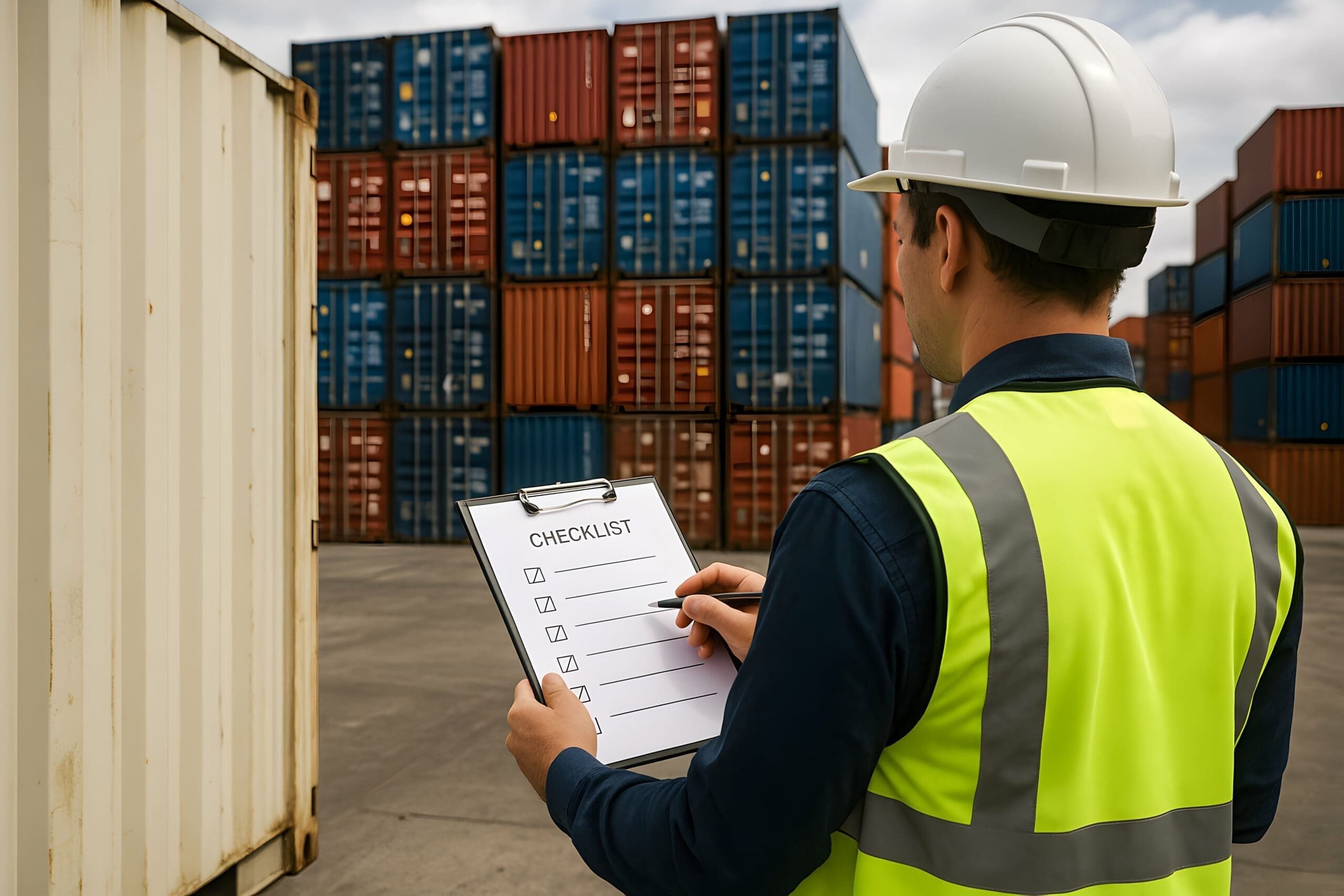
Professional inspections are often required for export containers, especially for SOC shipments. Container Sales Group works with a nationwide network of independent container surveyors who inspect containers and issue documentation upon request.
Survey support may include:
• Visual inspection reports
• CSC Survey Certificates
• Condition photos
• Export documentation support
This ensures containers meet port and carrier requirements before pickup.
Export Certifications and Compliance Requirements
International shipping containers must meet global safety and inspection standards before entering port terminals.
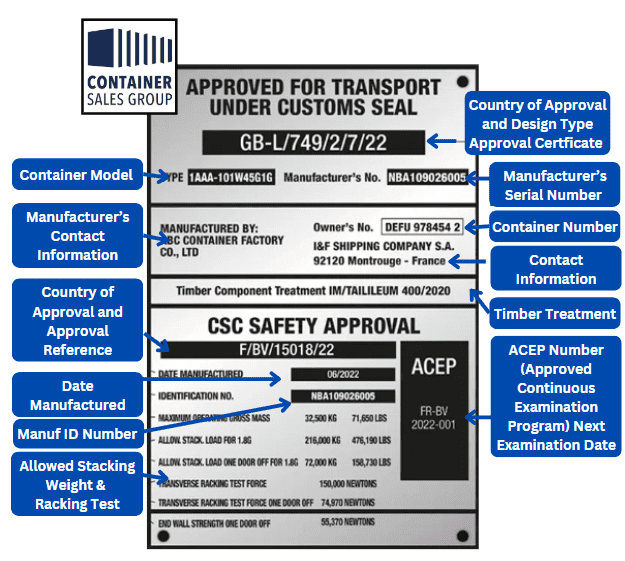
The most important certification is the CSC plate, issued under the International Convention for Safe Containers. A valid CSC plate confirms the container meets structural and safety requirements for ocean transport.
Additional standards include:
• ISO compliance for size and strength
• ACEP programs for ongoing container maintenance
• IICL grading for higher-condition containers often preferred by carriers
Most ocean shipments require a CSC-certified container. Without it, containers may be rejected at port or refused by carriers.
From Our Blog
Choosing the Right Shipping Container for Ocean Export
Understanding container markings, CSC plates, and survey certificates is essential for safe transport, compliance, and inspection readiness. If you’re ready to source shipping containers that meet industry standards and match your exact needs — whether for export, storage, jobsite use, or logistics support — Container Sales Group can help. We offer a wide selection of new and used containers with accurate condition grading, proper documentation, and reliable delivery.
Why Exporters & Freight Forwarders Choose Container Sales Group
Wholesaler of New & Used Shipping Containers Throughout the United States
Customer Reviews
Purchasing Questions
Once you’ve selected the container size, we’ll email you an invoice to complete your purchase.
After payment is received, your container will be inspected for the CSC survey if one has been ordered. You will then receive the pickup and release details, including the depot facility address and pickup or release number, so transportation can be scheduled.
Payment can be made by ACH, Wire Transfer, Mailed Check, Overnight payment, Major Credit or Debit Card.
CSC stands for Convention for Safe Containers. A CSC plate certifies that a shipping container meets international safety and structural standards required for ocean transport. This certification is recognized worldwide by shipping lines, ports, and regulatory authorities and confirms the container is suitable for international shipping.
A CSC is required for containers used in international ocean export, regardless of whether the container is new or used. New containers typically come with an initial CSC plate, while used containers may require inspection and recertification. Having a valid CSC ensures your container is compliant, reduces the risk of delays or rejection at the port, and provides confidence that the container meets safety standards for global transport.
Export Questions
Yes. A valid CSC plate is required for containers used in international ocean transport. It confirms the container meets structural safety standards for shipping.
Cargo Worthy containers meet minimum standards for transport but may require a current CSC inspection for ocean export. Wind & Water Tight containers are suitable for storage but are not typically approved for overseas shipping.
An export-ready container should have a valid CSC plate, legible container markings, and pass a visual inspection confirming it meets carrier and port requirements.
Not for every shipment, but CSC plates must be current. Some carriers or ports may require a recent survey or inspection depending on the cargo and destination.
Yes. Our team helps exporters and logistics providers select containers that meet ocean export requirements. Give us a call at 888-320-5938
When exporting a container overseas, a licensed freight forwarder is responsible for coordinating the entire transportation process from pickup through international delivery. After you purchase a container, the freight forwarder arranges drayage from the depot, books ocean freight, handles port and carrier requirements, and manages export documentation. This ensures your container moves compliantly through terminals, vessels, and customs while reducing the risk of delays, penalties, or rejected shipments.
A CSC plate is typically valid for up to five years from the date of manufacture, with periodic inspections required to maintain compliance. After the initial period, containers must be re-inspected at set intervals to remain approved for international shipping. Renewal timing can vary based on container age, condition, and shipping line requirements. Ensuring your CSC is current helps prevent port delays, rejected bookings, and compliance issues during export.