
This guide covers everything you need to know before buying a shipping container from choosing the right size and condition to understanding delivery, inspection, and site preparation.
Whether you’re purchasing a container for residential storage or business use, knowing what to expect ahead of time helps prevent delays, extra costs, and delivery-day surprises. At Container Sales Group we break the process into clear, practical steps so you can buy with confidence.
Introduction to Shipping Containers
Shipping containers are standardized, heavy-duty steel boxes used to transport and store goods by ship, truck, and rail. They are a core part of global trade, allowing cargo to move securely and efficiently across international and domestic supply chains.
Also known as cargo containers, freight containers, Conex boxes, or ISO containers, shipping containers are built to uniform sizes and strength standards so they can be easily stacked, lifted, and transferred between different transportation methods without unloading the cargo.
Types And Sizes Of Shipping Containers
Choosing the right shipping container starts with selecting the proper size and type for your storage, transport, or project needs
Standard Shipping Container Sizes
Most containers are:
- 8 ft wide
- 8 ft 6 in high
- Available in 20 ft and 40 ft lengths
Standard, general purpose containers have double doors on one end of the container. This is the most common choice for storage, job sites, and general-purpose use.
There are also a High Cube option that is 9 ft 6 in height, providing extra vertical space.

A double-door (one end) shipping container is designed with full-width doors on one end, offering wider access than a standard single-door container. This configuration simplifies loading and unloading of palletized goods, machinery, and oversized items using a forklift, while preserving the strength and security of a traditional container.
Key features include:
- Full-width steel cargo doors on one end
- Heavy-duty locking bars for security
- ·Compatible with forklifts and palletized loading
- Same durable Corten steel construction as standard containers
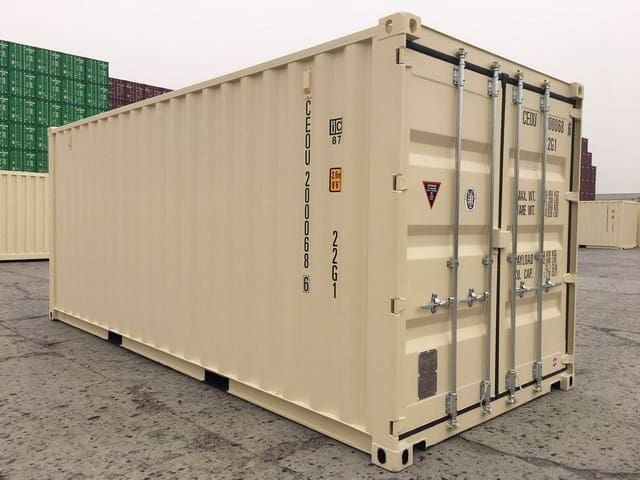
A double-door (one end) shipping container is designed with full-width doors on one end, offering wider access than a standard single-door container. This configuration simplifies loading and unloading of palletized goods, machinery, and oversized items using a forklift, while preserving the strength and security of a traditional container.
Key features include:
- Full-width steel cargo doors on one end for wider access
- Increased interior height (approximately 9’6″) for added capacity
- Heavy-duty locking bars for enhanced security
- Forklift-friendly design for palletized and equipment loading
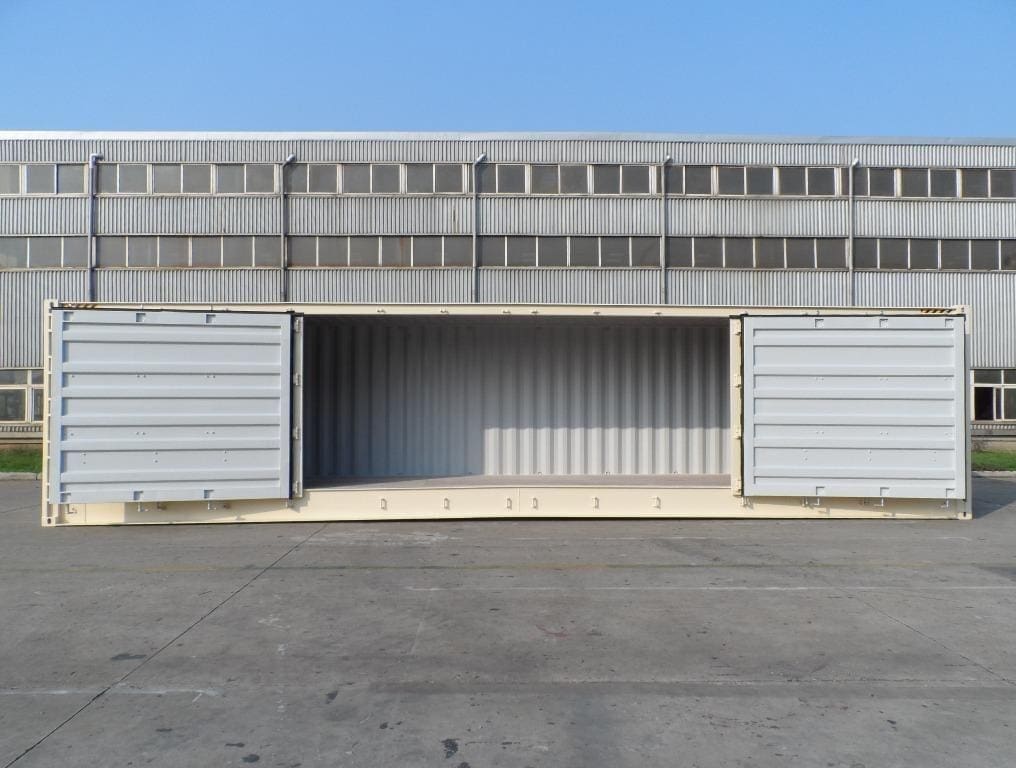
Open side containers provide full-length side access in addition to end doors, making it easy to load, unload, and access items without moving everything inside. The wide opening is ideal for shelving, displays, or frequent access to stored materials.
Key Features:
- Available in Full Open-Side, 2-Door, or 4-Door configurations
- Wide side access for easy loading and organization
- Heavy-duty steel construction
- Lockable, weather-tight doors
- Ideal for storage, workshops, and frequent-access use
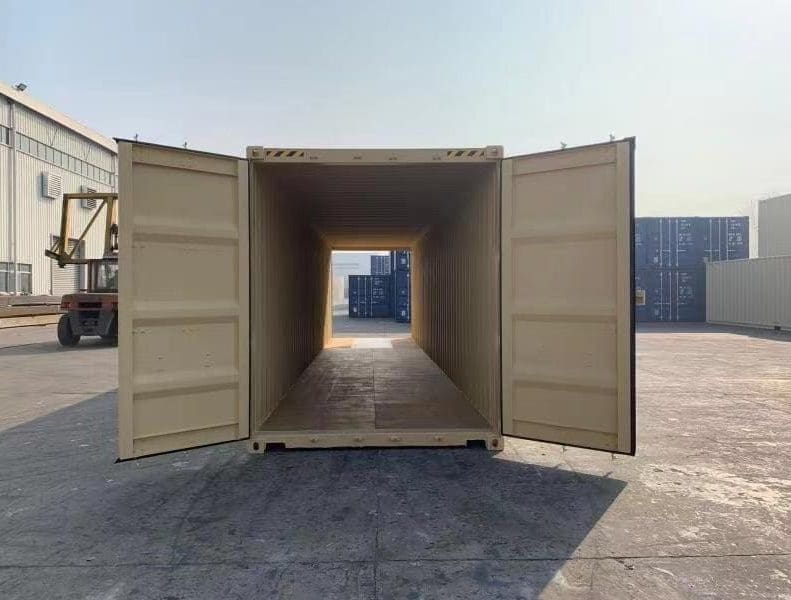
Also known as a tunnel container, this type has full doors on both ends for straight-through access. It allows loading and unloading from either side, improves workflow, and works well when containers are placed end-to-end.
Key Features:
- Full-size cargo doors on both ends of the container
- Straight-through access from front to back
- Better natural airflow when both doors are open
- Heavy-duty steel construction with lockable doors on each end

Open top containers are designed with a removable tarp roof instead of a solid steel top, allowing cargo to be loaded from above using a crane. They maintain the structure of a standard container while accommodating taller or awkwardly shaped items.
Key Features:
- Removable tarp (or hard-top) roof for top loading
- Designed for crane, forklift, or overhead loading
- Reinforced end walls and heavy-duty floor for dense cargo
- Standard cargo doors on one end for secure access

Flat rack containers have collapsible or fixed end walls with no side walls or roof, making them ideal for oversized or heavy cargo that won’t fit inside a standard container. Cargo can be loaded from the top or sides and secured with chains or straps.
Key features:
- Open-sided design for top and side loading
- Fixed or collapsible reinforced end walls for cargo support
- Heavy-duty steel frame and reinforced floor for dense or oversized loads
- Designed for crane, forklift, and overhead lifting operations
Note: Flat rack containers do not include a roof or standard cargo doors. Tarps or hard covers, if required, are supplied separately depending on cargo and shipping requirements.
Questions about specialty containers? Call our team at (888) 320-5938 for expert guidance.
Shipping Container Condition Grades Explained

New/One-Trip Shipping Containers
New shipping containers often called one-trip containers have completed a single overseas voyage carrying cargo from the manufacturer.
Features:
- Clean interior with minimal wear
- Factory paint with minor dings & dents, no rust
- Odor-free plywood flooring
- Fully operational doors, seals, and locking bars
Best for:
- Residential storage near homes
- High-visibility commercial sites
- Container modifications or conversions
Wind & Water Tight (WWT) Containers
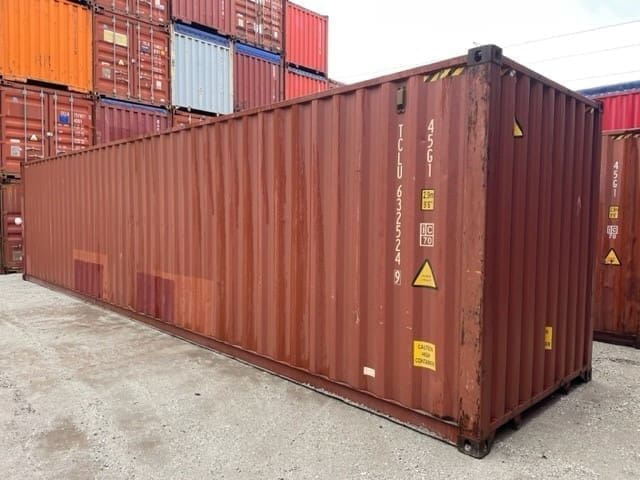
WWT ( Wind & Water Tight) is the most common and important condition standard for used shipping containers.
Features:
- Keeps out rain, snow, and pests
- May have some exterior rust, dings, dents & professional welded patch.
- Has door gaskets that seal properly
- Shows no visible light inside when doors are closed
Best for:
- Secure storage
- Equipment, tools, or inventory
- Long-term outdoor placement
This is the minimum recommended condition for storage buyers.

Cargo Worthy
(CW) Containers
Cargo Worthy containers meet structural standards required for ocean transport (export), though many buyers purchase them for land use.
Features
- Structurally sound for stacking and transport
- Inspected going overseas and written survey certificate (at additional cost)
- More wear than one-trip, but stronger grading
Best for:
- Export or intermodal shipping
- Buyers who need transport certification
- Heavy industrial use
Choosing Between New and Used Shipping Containers
When deciding between purchasing new or used shipping containers, there are several factors to consider, including your budget, intended use, and specific requirements. Both New (also known as a One-Trip or One-Way) and Used Containers have their advantages and disadvantages. Here’s a comparison to help you make an informed decision:
New/One-Trip Shipping Containers
Advantages:
- Condition: New containers are in great condition compared to used units. They have minimal wear and tear and offer the highest level of structural integrity and cargo protection.
- Longevity: New containers typically have a longer lifespan compared to used ones, which means they may require less maintenance and repair over time.
- Ease of Use & Appearance: Doors generally open and close more easily, and the container maintains a more uniform, professional appearance.
Disadvantages:
- Cost: New shipping containers are more expensive than their used counterparts, which can significantly have an impact on your budget.
- Environmental Impact: Purchasing new containers contributes to the demand for new steel production, which has environmental implications. Used containers are a more sustainable option.
- Availability & Lead Time: New/one-trip containers may have more limited availability in certain sizes or locations and can involve longer lead times compared to readily available used units.
Used Shipping Containers
Advantages:
- Cost-Effective: Used containers are more budget-friendly, making them a cost-effective choice for many buyers.
- Sustainability: Buying used containers promotes recycling and sustainability by extending the life of existing resources, reducing the need for new container production.
- Availability: Used containers are readily available in the market, with various sizes and types to choose from.
Disadvantages:
- Condition: Depending on what shipping container vendor you purchase a used container from, the condition varies significantly depending on their age and previous usage. Some may even require maintenance and repairs.
- Limited Color Selection: Unlike new or one-trip containers, used containers are not sold by color. They are sold next off the top of a stack that have been inspected for water/wind tight condition. Matching colors for multiple containers can be difficult unless repainting is planned.
- Door Operation May Require Maintenance: Doors on used containers may feel stiff or require lubrication due to age and prior use. This is common and easily maintained but can surprise first-time buyers expecting “like-new” operation.
How To Choose The Best Container For Your Needs
When deciding between new and used shipping containers, consider the following factors:
Budget
Determine how much you are willing to spend and whether the cost difference between new and used containers aligns with your budget.
Intended Use
Consider the specific requirements of your intended use. If you need a container for long-term storage or a critical application, a new container may be the better choice. For short-term or less critical uses, a used container may suffice.
Condition
Inspect used containers thoroughly to assess their condition. Look for signs of rust, damage, or structural issues, and evaluate if any necessary repairs are within your budget.
Customization
If you require extensive modifications or customization, a new container may provide more flexibility and a better starting point.
Environmental
If environmental considerations are important to you, buying used containers may align better with sustainable practices.
In summary, the choice between new and used shipping containers depends on your specific needs, budget, and preferences. Careful evaluation of the advantages and disadvantages of each option will help you make the right decision for your situation.
Common Uses for Shipping Containers
Shipping containers are widely used across residential, commercial, agricultural, and industrial industries due to their durability, flexibility, and cost efficiency. Below are the most common and practical ways customers use shipping containers today.
Storage & Utility Uses for Shipping Containers
Shipping containers are frequently used for secure storage across personal, business, and agricultural applications.
Personal & Residential Storage
- Garage alternatives
- Tool and equipment storage
- Seasonal item storage (boats, ATVs, lawn equipment)
Business & Jobsite Storage
- Inventory storage
- Construction materials
- Landscaping and contractor equipment
Farm & Agricultural Storage
- Hay and feed storage
- Machinery and equipment
- Tack rooms and livestock shelters
Commercial & Retail Shipping Container Applications
Businesses use shipping containers to create fast, flexible, and visually unique spaces.
Pop-Up & Mobile Businesses
- Retail shops and market stalls
- Cafés, bars, and food service concepts
- Event-based retail or seasonal businesses
Temporary Commercial Structures
- Construction site offices
- Guard shacks and security booths
- Event kiosks and ticketing stations
- Testing or inspection centers
Permanent & Semi-Permanent Commercial Uses
• Modular office buildings
• Warehouses and overflow storage
• Showrooms and branded display spaces
• Training rooms and meeting spaces
• Equipment housing and utility enclosures
Specialized & Industrial Shipping Container Uses
Shipping containers are commonly adapted for specialized and mission-critical environments.
Agriculture & Food Production
- Vertical farming systems
- Greenhouses
- Controlled-environment agriculture
Training & Simulation Facilities
- Firefighter training units
- Police training facilities
- Obstacle courses and simulation environments
Emergency & Medical Applications
- Mobile hospitals and clinics
- Laboratories
- Disaster response shelters
How to Buy a Shipping Container
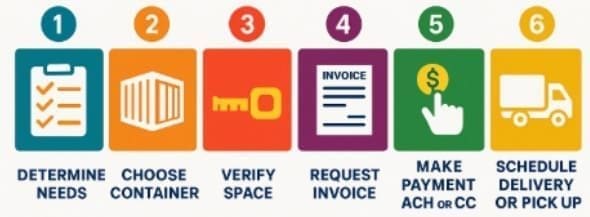
Step 1: Determine Your Needs
Start by identifying how you plan to use the container and what you’ll store inside. Consider whether access will be occasional or frequent, how much interior space you need, and if you plan to modify the container in the future.
Tips:
- Make a quick list of items to be stored (size and quantity)
- Decide if height (standard vs high cube) matters
- Think about how often you’ll need to open the doors
Step 2: Choose a Container
Select the container type, size, and condition that best matches your needs. Standard containers work well for general storage, while specialty containers offer improved access or loading flexibility.
Tips:
- New / One-Trip containers offer the cleanest condition
- Used WWT containers are cost-effective for storage
- Specialty containers (double-door, open side) improve access but may cost more
Step 3: Verify Space
Confirm that your site can accommodate delivery and placement. Most containers are delivered by tilt-bed truck and require adequate straight-line space, width, height clearance, and level ground.
Tips:
- Measure access points, gates, and driveways
- Check for overhead wires or tree limbs
- Ensure the ground is solid and level to avoid door issues
Step 4: Request an Invoice
Once your container is selected and site access is confirmed, request an invoice to lock in pricing and availability. Container inventory and delivery rates can change, so confirming details upfront helps avoid delays.
Tips:
- Provide accurate delivery and billing addresses
- Confirm door orientation before invoicing
- Ask questions now to avoid changes later
Step 5: Make a Payment
Payment secures your container and allows delivery or pickup to be scheduled. Payment options vary, so choose the method that works best for you.
Tips:
- Review invoice details carefully before paying
- ACH payments often avoid processing fees
- Payment is required before delivery is scheduled
Step 6: Schedule Delivery
After payment is received, delivery or pickup is scheduled based on site access, container availability, and local trucking routes.
Tips:
- Be available on delivery day or assign a contact
- Review delivery requirements in advance
- Prepare the site to ensure smooth placement
Site Preparation Requirements (Critical for Delivery Day)
Before delivery, make sure your site meets the following requirements:
1. Check Permits & Local Regulations
- Some municipalities require zoning or temporary placement permits.
- Always check local regulations before delivery.
2. Verify Space Requirements
- Verify clear access for the delivery truck from the road to the placement area.
- Ensure at least 12 feet of width for truck access.
- Confirm a minimum of 16 feet of overhead clearance (trees, wires, structures).
- Check turning radius and approach angle for the truck.
- For a 20-ft container, allow approximately 50–75 feet of straight-line space.
- For a 40-ft container, allow approximately 120–150 feet of straight-line space.
- Confirm the container can be placed with the correct door orientation.
3. Prepare a Level Foundation
- Select firm, level ground (gravel, asphalt, or concrete preferred).
- Use concrete blocks, railroad ties, or footings at all four corners.
- Ensure the container will sit evenly to avoid door alignment issues.
4. Clear the Delivery Area
- Remove vehicles, debris, fencing, or equipment from the delivery path.
- Trim low-hanging branches or vegetation.
- Keep the drop area clear and accessible.
5. Check Ground Conditions
- Avoid soft, muddy, or recently filled ground.
- Confirm ground stability after heavy rain or snow.
- Add gravel or reinforcement if the ground is soft.
6. Confirm Door Orientation
- Containers delivered by tilt-bed trucks slide off the back of the truck, so door direction must be set in advance—especially near fences or buildings. Doors can face the truck cab (doors down last) or the rear of the truck (doors down first). Door orientation does not apply to long-distance flatbed deliveries.
- Repositioning after delivery may require additional equipment and cost.
7. Be On-Site for Delivery
- Clearly mark the intended container location with cones, stakes, or flags.
- Be available to inspect the container once it is set in place.
- Have blocks or railroad ties ready if they will be placed as the container slides off the back of the truck
Common Shipping Container Delivery Methods
Understanding how shipping containers are delivered—and how to prepare your site in advance—is one of the most important parts of a successful container purchase. Most delivery issues (and added fees) come from site access problems, not the container itself.
Common Shipping Container Delivery Methods
- Tilt-Bed (Roll-Off) Truck
The most common delivery method for residential and small business customers. The truck tilts and slides the container off the back. - No forklift or crane required
- Requires straight-line space to unload
- Best for most 20ft and 40ft container deliveries
- Flatbed Truck
Used for longer distances or when tilt-bed access isn’t possible. - Customer must provide a forklift, crane, or other equipment to unload
- Often used at industrial sites or depots
- Sideloader Truck (Limited Availability)
A specialized truck that lifts the container off the side. - Useful for tight spaces
- Not available in all markets
- Typically higher cost
Your supplier should confirm the correct delivery method before scheduling based on your site conditions. Here is a resource to learn more: Shipping Container Delivery & Site Prep
Shipping Container Inspection Guidelines
Inspecting a shipping container upon delivery is crucial to ensure that you receive a container in the condition you expect. Whether you are purchasing a new or used container, here are steps to follow when inspecting a shipping container upon delivery:
1. Prepare in Advance
Before the container arrives, gather the following:
- Flashlight
- Leveler to measure ground to ensure ground is level
- Inspection checklist or notes from supplier
Being prepared allows you to document any issues while the driver is still on-site.
2. Inspect the Exterior
For New / One-Trip Containers:
- Check for substantial dents, damage, or surface rust
- Pay close attention to corners, edges, and welded points
- Inspect paint for peeling, flaking, or exposed steel
For Used Containers (WWT):
- Check for major rust through the metal-cosmetic wear does not affect WWT performance
- Look for any visible light coming through the walls, doors, or roof
- No visible light indicates the container is wind- and water-tight
- If doors are difficult to open or close, the container may be sitting on uneven ground
- Inspect hinges, locking bars, and handles to ensure proper function
3. Inspect the Interior
- Walk inside the container and close the doors
- Check for signs of moisture, dampness, or water stains
- Look for rust on interior walls, ceiling, and floor
- Inspect the roof from inside for dents or pinholes that could cause leaks
4. Report Issues Immediately
- If you notice structural damage, excessive rust, leaks, or door issues, contact your container provider immediately
- Do not allow the delivery driver to leave until the issue is reported
- Take photos and document concerns while the container is on-site
- Resolve or document any discrepancies before accepting delivery
Remember that a thorough inspection is essential to ensure you receive a container in the condition you expect. If you have any concerns or discover significant issues during the inspection, communicate with the seller promptly to address and resolve them during the inspection.
Shipping Container Maintenance and Care
Proper maintenance helps extend the lifespan of a shipping container and keeps it wind- and water-tight over time. Follow these best practices:
Regular maintenance includes:
- Rust & Corrosion Prevention
- Inspect the exterior regularly for rust or corrosion
- Sand affected areas, apply primer, and repaint with rust-resistant or marine-grade paint
- Use rust inhibitors or protective coatings in harsh or coastal environments
- Door, Hinge & Lock Maintenance
- Lubricate door hinges, locking bars, and moving parts routinely
- Ensure doors open and close smoothly to prevent misalignment or seal damage
- Exterior Paint & Surface Protection
- Repaint faded or damaged areas as needed to protect exposed steel
- Use container-grade or marine-grade paint for long-term durability
- Roof Inspection & Sealants
- Check the roof for dents, punctures, or low spots that may collect water
- Repair damage promptly to prevent leaks and interior moisture issues
Upgrade Your Shipping Container for Security & Everyday Use
A few simple accessories can significantly improve how your shipping container functions day to day—especially when it comes to security, access, ventilation, and long term durability. These upgrades are easy to add and can turn a basic container into a safer, more usable storage or workspace.
Popular Shipping Container Accessories to Consider
-
Lockboxes
Protects padlocks from cutting and tampering by shielding the lock shackle. One of the most effective container security upgrades available. -
Heavy-Duty Padlocks
Commercial-grade padlocks designed for outdoor use offer better resistance to weather, cutting, and forced entry. -
Motion-Activated Lighting
Helps deter unauthorized access after dark. Motion-sensing lights draw attention to movement and make containers less appealing targets. -
Security Cameras or Monitoring Systems
Adds visibility and accountability, especially in high-traffic or shared areas. Even visible cameras can discourage tampering.
Final Security Tip
The best container security strategy combines location, physical locks, lighting, monitoring, and insurance. When used together, these measures significantly reduce risk and help protect your investment.
Final Thoughts Before You Buy a Shipping Container
Buying a shipping container doesn’t have to be complicated, especially when you understand the key factors upfront. Knowing the differences between container types and sizes, condition grades, inspection requirements, and delivery logistics helps you avoid surprises and make a confident, informed purchase.
Whether you’re buying your first container for residential storage, adding a container garage, or sourcing containers for a business, job site, or organization, having the right guidance matters.
If you’d like expert help choosing the right container or want pricing based on your location, call (888) 320-5938 to speak directly with a knowledgeable container specialist at Container Sales Group (top shipping container seller in the United States) —Or simply request a quick online quote.
FAQ
The most common shipping containers include standard single-door containers, double-door containers, high cube containers, and specialty containers such as open side, open top, and flat rack containers. Each type is designed for different access, height, or loading needs.
A standard container is typically 8’6″ tall, while a high cube container is 9’6″ tall. High cube containers provide an extra foot of interior height, making them ideal for taller items, shelving, or container modifications.
Wind & Watertight (WWT) means the container is structurally sound and sealed to keep out wind and water under normal conditions. WWT containers may show cosmetic wear but are suitable for secure storage and jobsite use.
A New / One-Trip container is newly manufactured and used one time to transport dry cargo from overseas. These containers offer the cleanest condition available, with minimal wear and no structural damage, though minor cosmetic marks from handling may be present.
The most common sizes are 20 ft and 40 ft.
- A 20 ft container is easier to deliver and ideal for residential storage, workshops, or small projects.
- A 40 ft container offers double the space and works well for commercial storage, equipment, or large jobsites.
If you need extra height, consider a High Cube container (9’6” tall).
- New / One-Trip containers are used once to ship cargo from the manufacturer and arrive clean with minimal wear.
- Used containers are typically 10–15 years old and may show dents, surface rust, or repairs but are more affordable.
Both are strong steel containers—the choice depends on appearance needs and budget.
Most containers are delivered using a tilt-bed truck, which requires straight-line space, adequate width for turning, overhead clearance, and level ground. Access requirements vary by container size and delivery method and should be reviewed before scheduling delivery.
Yes, shipping containers are commonly used for household storage. Many customers choose New / One-Trip or WWT containers and ventilate or clean the interior prior to use. Containers are designed to protect contents from the elements when properly maintained.
Pricing depends on size, condition, location, and delivery distance.
Typical ranges:
- 20 ft used: ~$2,000–$4,500
- 20 ft new / one-trip: ~$3,500–$6,500
- 40 ft used: ~$2,800–$6,000
- 40 ft High Cube new: ~$6,000–$10,000+
Delivery is priced separately based on distance and site access.