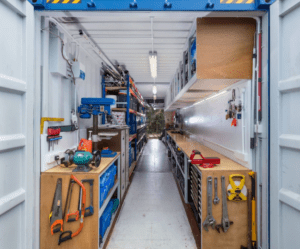
Contractors and architects have been using shipping containers on job sites for decades. What has changed in 2026 is how sophisticated those applications have become. A steel container on a construction site is no longer just a lockbox for tools. It is a mobile office, a secure equipment vault, a modular building component, and in some cases the structure itself.
This guide answers the questions contractors and architects ask most often about buying new, used, and specialty containers for construction applications. Whether you are outfitting a job site or incorporating containers into an architectural design, here is what to know before you buy.
Why Professionals Choose Shipping Containers for Construction
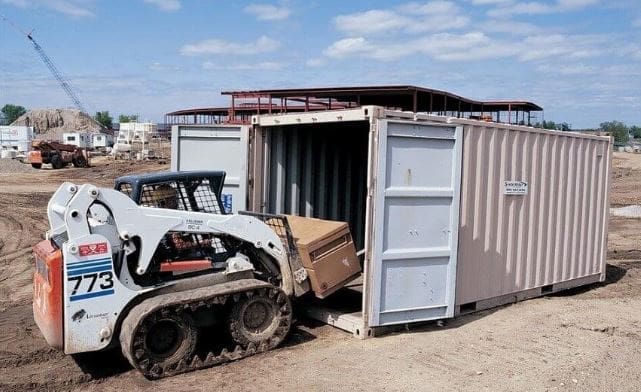
The construction industry demands equipment and storage solutions that can take a beating, move when the job moves, and hold up through every season. Shipping containers for construction deliver on all three.
Built from 14-gauge corrugated steel and engineered to survive ocean crossings stacked six high, containers are among the most durable portable structures available. They lock tight, resist forced entry, and do not require a foundation for temporary use. When the job is done, they move to the next site.

New vs. Used Containers: Which Is Right for Your Project?
The first decision most construction buyers face is whether to purchase a new one-trip container or a used unit. Here is how to make that call.
New/ One Trip Containers
A one-trip container is manufactured overseas, loaded with cargo once, and sold upon arrival at their destination port. Minimal dents, clean interior, tight door seals, and flooring that has not been subjected to heavy repeated use.
Best for: on-site offices, client-facing applications, architectural builds, modular construction projects, and any use where interior condition and appearance matter. Covered by our Container Guarantee.
Used Wind & Watertight (WWT) Containers
A wind and watertight container has been inspected and confirmed to keep weather out. No holes, no leaks, no compromised door seals. Surface rust and cosmetic wear are expected and normal. These units have been in service and look like it. What they will not do is leak.
Best for: job site tool and equipment storage, material lockup, and any application where security and weatherproofing matter more than cosmetic condition. Covered by our Wind and Watertight Guarantee.
The Bottom Line
For most job site storage applications, a WWT used container is the practical and cost-effective choice. For offices, client-facing spaces, or architectural builds where condition matters, step up to a one-trip unit. See our full new vs. used shipping container comparison before deciding.
Container Sizes for Shipping Container Construction Applications
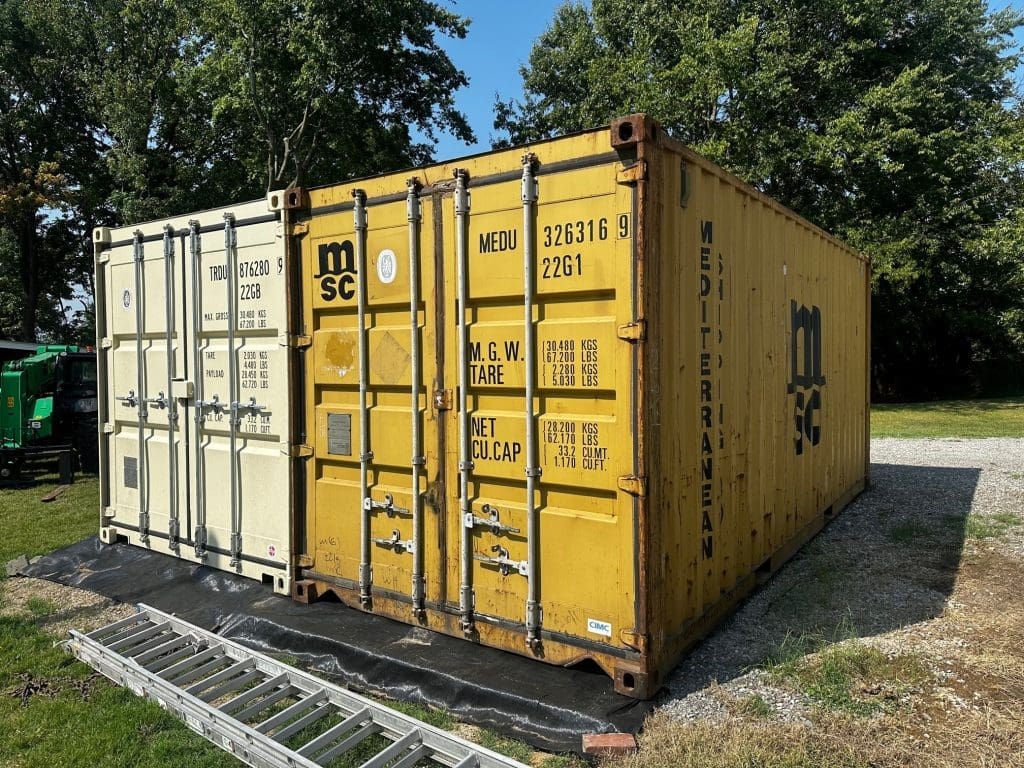
Shipping containers are also called a Conex box. Matching the right container to your project starts with size. Here is how each configuration maps to common construction and architectural uses.
20ft Standard Conex Box — the most versatile choice for job sites. Easy to deliver to tight urban lots and active construction sites with limited access. Works well for tool storage, equipment lockup, and compact site offices. Interior dimensions approximately 19’4″ long x 7’8″ wide x 7’10” high.
40ft Standard Conex Box — the right choice for larger job sites, bulk material storage, and equipment that needs more floor space. Interior dimensions approximately 39’5″ long x 7’8″ wide x 7’10” high.
40ft High Cube Conex Box — one foot taller than a standard container with a 9’6″ interior height. Ideal for tall equipment, shelving systems, and architectural builds where interior height matters.
Specialty New/One-Trip: Open Side Containers — 20ft full side or 2-door and 40ft HC full side or 4-door access along the entire length of the unit. Eliminates the first-in-last-out problem of standard end-door containers. Ideal for storing long materials like lumber, pipe, and rebar, and for high-traffic access during active construction.
Specialty New/One-Trip: Double Door Tunnel Containers — doors on both ends for drive-through access. Useful for workflow efficiency on busy sites where equipment and materials move in and out frequently from both directions.
Every size can be outfitted with accessories. Visit ContainerSalesGroup.com to see the full lineup.
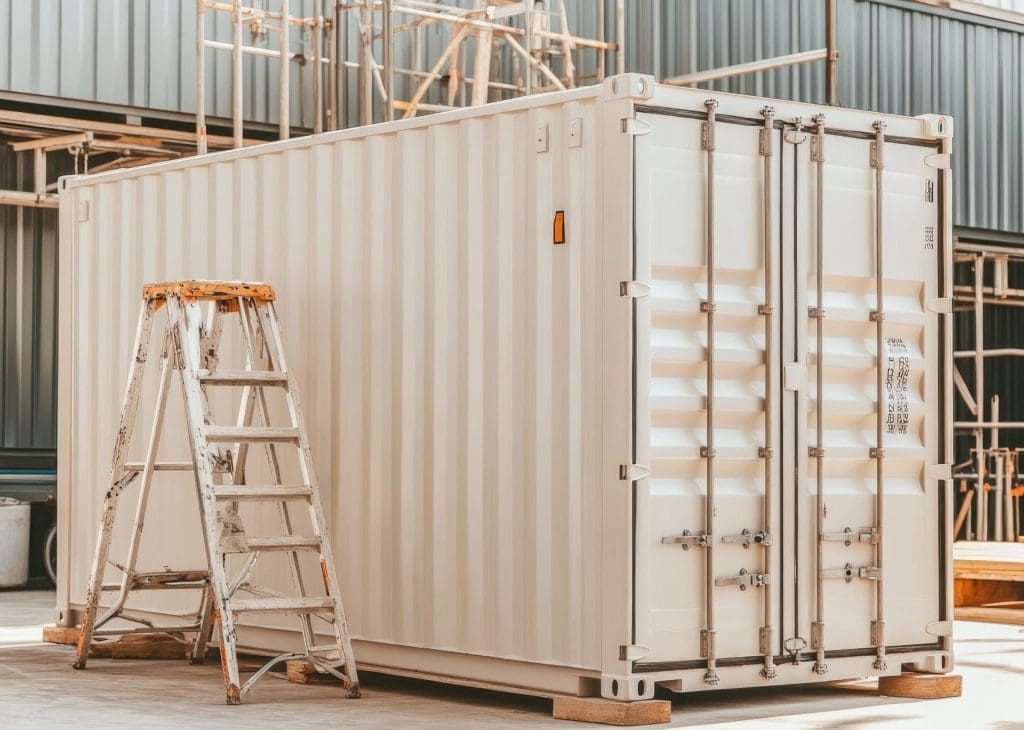
Job Site Storage Shipping Containers: What Contractors Need
For contractors, a container used for construction needs to do three things well: lock tight, keep weather out, and survive the site conditions it is placed in.
Security
Containers are built from 14-gauge corrugated steel with heavy-duty door hardware. For added security beyond the standard door locks, lockboxes are the most effective upgrade available. A lockbox is a shrouded steel housing that covers the padlock completely, making it nearly impossible to reach with bolt cutters. Combined with a heavy-duty puck lock, a properly secured container is one of the most secure portable storage options on any job site.
Weather Protection
A wind and watertight container keeps rain, wind, snow, and pests out. For tools, equipment, and materials that need to stay dry through a Midwest winter or a summer storm, WWT is the standard that matters. Every used container that Container Sales Group sells carries our Wind and Watertight Guarantee in writing.
Site Placement
Containers need a level, stable surface. Solid ground, compacted gravel, asphalt, and concrete all work well on active construction sites. Soft or uneven ground causes the container to shift and can make doors difficult to open and close over time. For temporary job site use, pressurized wood blocks at the four corners are a common and practical solution. See our container delivery and site preparation guide for details.
Load-Bearing Capacity
Standard ISO shipping containers are engineered to be stacked eight to ten units high when fully loaded at sea. That structural integrity translates directly to architectural applications. Corner castings are the load-bearing points, and any serious modification plan should account for how cutting openings affects the structural system.
Standard Dimensions
Containers come in standardized shipping container dimensions that simplify modular design. The 8-foot width and 8’6″ or 9’6″ height create a consistent module that stacks, connects, and combines predictably. This makes containers a practical building block for modular offices, housing units, retail installations, and mixed-use structures.
Modification Considerations
Cutting large openings in container walls requires structural reinforcement. The side walls contribute to the container’s overall rigidity, and removing sections without adding steel header framing compromises that. Any architectural application involving significant wall modifications should involve a structural engineer familiar with container construction.
One-trip containers are the right starting point for architectural builds. Cleaner welds, tighter tolerances, and near-new steel make modification work cleaner and more predictable than starting with a heavily used unit.
Open Side and Tunnel Shipping Containers for Construction
Standard shipping containers only open at one end. For construction and architectural applications that require more access flexibility, specialty configurations solve specific problems. Specialty containers are sold as new/one-trip containers.
Open Side Containers
Full side access along the 20-foot or 40-foot length of the unit. No more digging through stacked materials to reach the back. Direct access to any point in the container from the side. Ideal for lumber, pipe, rebar, and any long material that does not fit through standard end doors efficiently.
Open-side units require heavier steel framing to compensate for the removed side wall, which drives the price premium. For a 40-foot open-side unit, expect to pay 40 to 60 percent more than a standard container of the same size.
Tunnel Containers
Standard doors at both ends create drive-through access and two independent storage zones. Useful on active job sites where materials and equipment move in and out from multiple directions. Natural cross-ventilation when both ends are open makes tunnel containers more comfortable as temporary workspaces.
Why Construction Professionals Choose Container Sales Group
Container Sales Group has been serving contractors and construction professionals since 1998. Here is what sets us apart.
- We source directly from steamship lines, which means wholesale pricing passed directly to you..
- Real people answer the phone at (888) 320-5938 – not a call center, not a chatbot.
- Every used container is backed by our Container Guarantee.
- Transparent pricing with no hidden delivery fees or surprise charges at drop-off.
- Over 560 current five-star Google reviews from homeowners, contractors, and municipalities.
- Women-owned and WBENC-certified.
Ready to find the right container for your project? Call us at (888) 320-5938 or request a quote online. We will make it an easy and straightforward experience.